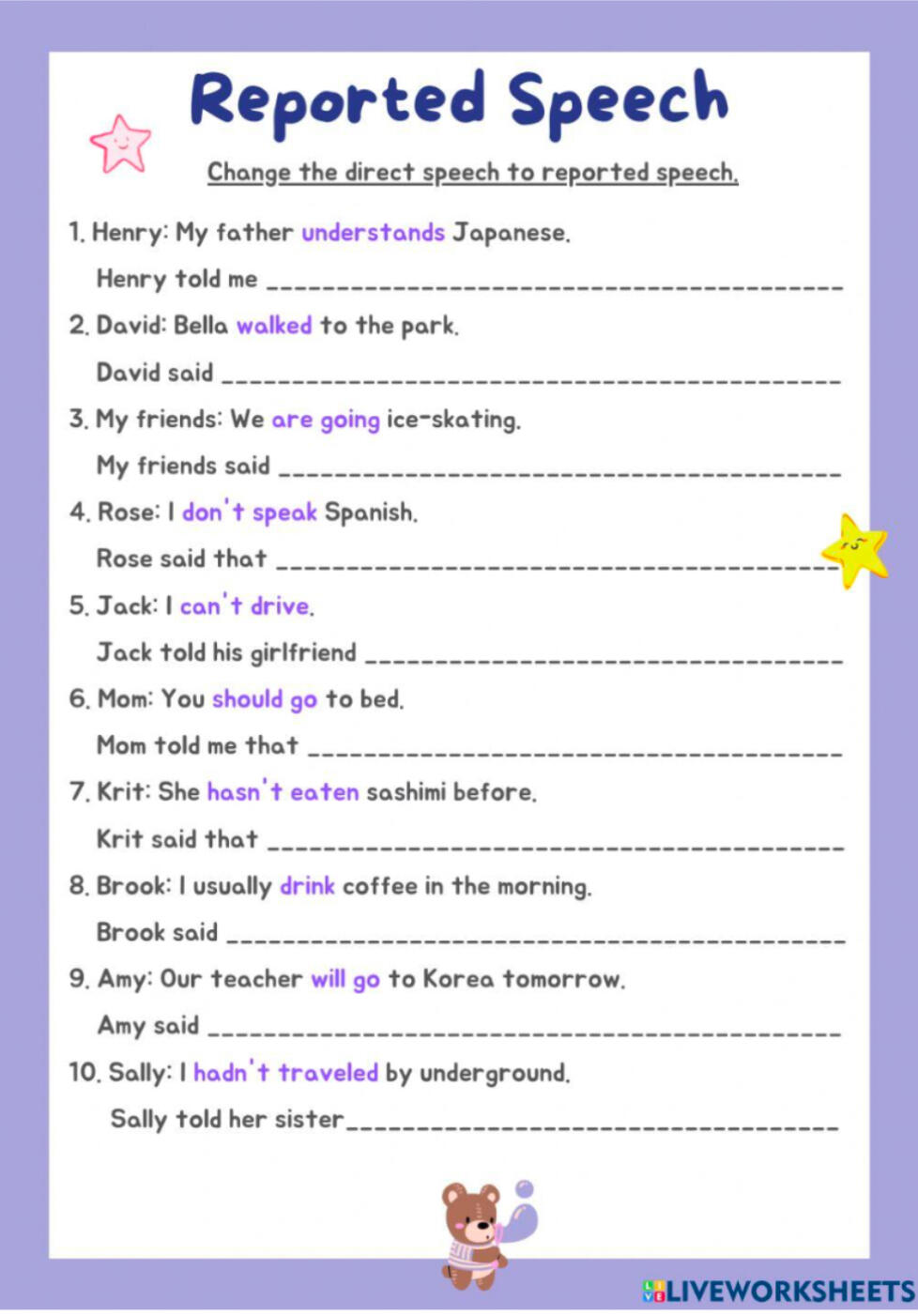
Reported Speech Worksheet Çözümü
Aşağıdaki cümlelerin "direct speech"ten "reported speech"e dönüştürülmesi gerekiyor. Soruların yanıtları şunlardır:
1. Henry: My father understands Japanese.
Henry told me that his father understood Japanese.
2. David: Bella walked to the park.
David said that Bella had walked to the park.
3. My friends: We are going ice-skating.
My friends said that they were going ice-skating.
4. Rose: I don’t speak Spanish.
Rose said that she didn’t speak Spanish.
5. Jack: I can’t drive.
Jack told his girlfriend that he couldn’t drive.
6. Mom: You should go to bed.
Mom told me that I should go to bed.
7. Krit: She hasn’t eaten sashimi before.
Krit said that she hadn’t eaten sashimi before.
8. Brook: I usually drink coffee in the morning.
Brook said that he usually drank coffee in the morning.
9. Amy: Our teacher will go to Korea tomorrow.
Amy said that their teacher would go to Korea the next day.
10. Sally: I hadn’t traveled by underground.
Sally told her sister that she hadn’t traveled by underground.
Yuvarlak içinde yazılı olan kelimelere özellikle dikkat ettiğinizi unutmayın, çünkü zaman değişimleri ve özne değişimi “reported speech” yapısının temelidir. Eğer anlamadığınız bir kısım olursa, detaylıca açıklayabilirim! 
@Zeynep137
Change the direct speech to reported speech (Cümleleri dolaylı anlatıma çevirin):
Answer:
Aşağıda her bir cümlenin reported speech (dolaylı anlatım) hali verilmiştir. Reported speech kurallarına göre; genellikle zamanı bir derece geçmişe çekeriz ve zamirlerde değişiklik yaparız.
1. Henry: My father understands Japanese.
Henry told me that his father understood Japanese.
2. David: Bella walked to the park.
David said that Bella had walked to the park.
3. My friends: We are going ice-skating.
My friends said (that) they were going ice-skating.
4. Rose: I don’t speak Spanish.
Rose said (that) she didn’t speak Spanish.
5. Jack: I can’t drive.
Jack told his girlfriend (that) he couldn’t drive.
6. Mom: You should go to bed.
Mom told me that I should go to bed.
7. Krit: She hasn’t eaten sashimi before.
Krit said that she hadn’t eaten sashimi before.
8. Brook: I usually drink coffee in the morning.
Brook said (that) she/he usually drank coffee in the morning.
9. Amy: Our teacher will go to Korea tomorrow.
Amy said (that) their teacher would go to Korea the next day.
10. Sally: I hadn’t traveled by underground.
Sally told her sister (that) she hadn’t traveled by underground.
Anahtarlar:
- “that” kelimesi kullanılabilir ya da atlanabilir, her iki durumda da doğrudur.
- Zamirler ve zamanlar cümlenin sahibine göre değiştirilmiştir.
- Present tense —> past tense, past simple —> past perfect, will —> would, “tomorrow” —> “the next day” gibi değişiklikler yapılır.
Her bir cümle İngilizce çeviri ve reported speech kurallarına uygun olarak çevrilmiştir. Takıldığın veya merak ettiğin bir yer olursa bana yazabilirsin!
Dolaylı Anlatım (Reported Speech) Dönüşümleri
Aşağıda, doğrudan anlatımdaki cümlelerin dolaylı anlatıma (reported speech) nasıl dönüştürüleceği adım adım gösterilmiştir.
1. Dolaylı Anlatım Kuralları – Kısa Hatırlatma
- Zaman kayması
- Simple Present → Simple Past
- Simple Past → Past Perfect
- Present Perfect → Past Perfect
- Will → Would
- Şahıs zamirleri konuşana ve dinleyene göre uyarlanır.
- Zaman ve yer zarfları
- today → that day, tomorrow → the next day, yesterday → the day before
- here → there, this → that vb.
2. Sorular ve Çözümleri
| No | Doğrudan Anlatım | Dolaylı Anlatım |
|---|---|---|
| 1 | Henry: “My father understands Japanese.” | Henry told me that his father understood Japanese. |
| 2 | David: “Bella walked to the park.” | David said that Bella had walked to the park. |
| 3 | My friends: “We are going ice‑skating.” | My friends said that they were going ice‑skating. |
| 4 | Rose: “I don’t speak Spanish.” | Rose said that she didn’t speak Spanish. |
| 5 | Jack: “I can’t drive.” | Jack told his girlfriend that he couldn’t drive. |
| 6 | Mom: “You should go to bed.” | Mom told me that I should go to bed. |
| 7 | Krit: “She hasn’t eaten sashimi before.” | Krit said that she hadn’t eaten sashimi before. |
| 8 | Brook: “I usually drink coffee in the morning.” | Brook said that she usually drank coffee in the morning. |
| 9 | Amy: “Our teacher will go to Korea tomorrow.” | Amy said that their teacher would go to Korea the next day. |
| 10 | Sally: “I hadn’t traveled by underground.” | Sally told her sister that she hadn’t traveled by underground. |
3. Özet Tablo
| Kurallar | Örnek |
|---|---|
| Simple Present → Simple Past | understands → understood |
| Simple Past → Past Perfect | walked → had walked |
| Present Perfect → Past Perf. | hasn’t eaten → hadn’t eaten |
| Will → Would | will go → would go |
| Zamir değişimi | my father → his father, we → they, our → their |
| Zaman zarfları | tomorrow → the next day |
4. Sonuç ve Özet
- Zaman kayması ve zamir uyarlamaları dolaylı anlatımın temelini oluşturur.
- Yukarıdaki tablo, her bir cümlenin doğrudan → dolaylı hâle dönüşümünü net bir şekilde göstermektedir.
- Bu kuralları benzer tüm cümlelerde uygulayarak reported speech ödevlerinizi kolayca tamamlayabilirsiniz.
Başarılar!
@Zeynep137
Change the direct speech to reported speech
Answer:
Aşağıdaki cümlelerin her birini dolaylı anlatım (reported speech) kurallarına göre dönüştürdüm. Zaman uyumu, kişi zamirleri ve belirteçleri (yesterday → the day before vb.) gerektiğinde değiştirilir. Örneklerde, alıntılayanın (told me, said that, told his girlfriend vb.) fiili geçmiş zamanda kullanıldığı için yüklemler bir derece geçmişe kaydırılmıştır.
-
Henry: “My father understands Japanese.”
Henry told me that his father understood Japanese. -
David: “Bella walked to the park.”
David said that Bella had walked to the park. -
My friends: “We are going ice-skating.”
My friends said that they were going ice-skating. -
Rose: “I don’t speak Spanish.”
Rose said that she didn’t speak Spanish. -
Jack: “I can’t drive.”
Jack told his girlfriend that he couldn’t drive. -
Mom: “You should go to bed.”
Mom told me that I should go to bed. -
Krit: “She hasn’t eaten sashimi before.”
Krit said that she hadn’t eaten sashimi before. -
Brook: “I usually drink coffee in the morning.”
Brook said that he usually drank coffee in the morning. -
Amy: “Our teacher will go to Korea tomorrow.”
Amy said that their teacher would go to Korea the next day. -
Sally: “I hadn’t traveled by underground.”
Sally told her sister that she hadn’t traveled by underground.