English Vocabulary and Science Experiment Terms Explained
Önemli Noktalar
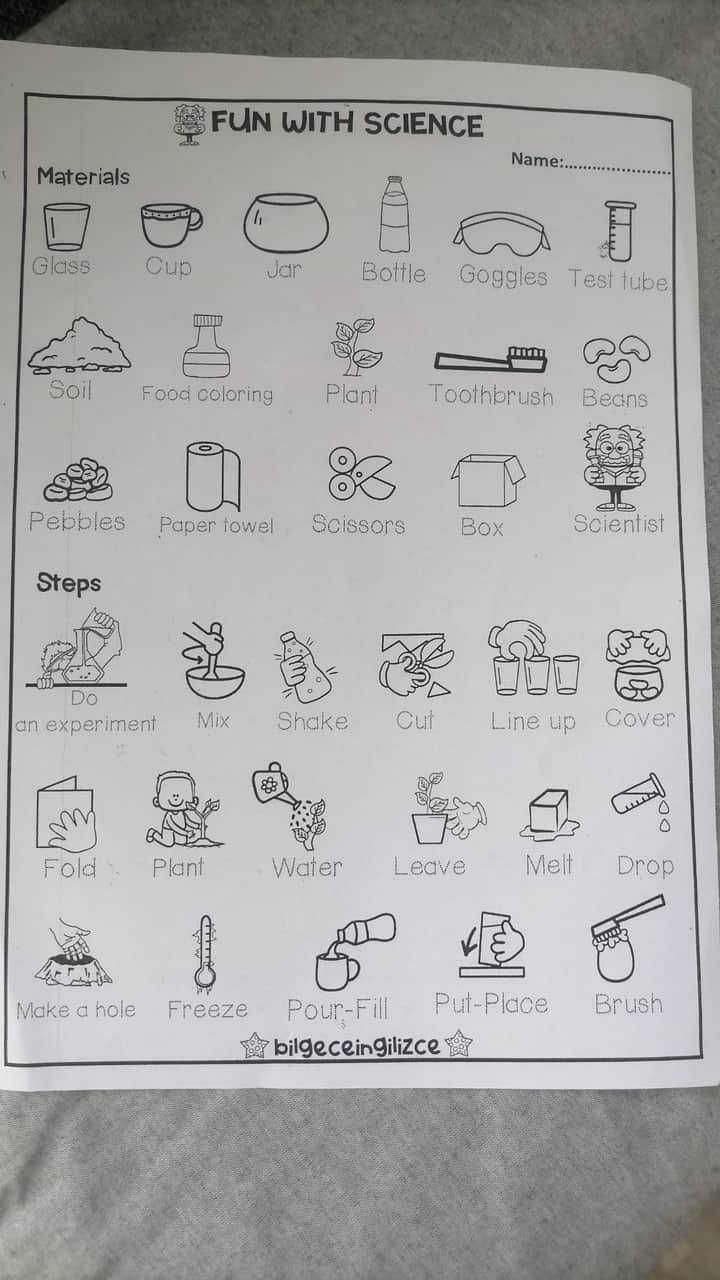
- The image lists common materials used in simple science experiments, like glass, soil, and beans.
- It also shows steps/actions involved in experiments, such as mix, shake, plant, and cover.
- These terms help young learners understand science activities and follow instructions in English.
The worksheet contains illustrated vocabulary related to science materials and experiment procedures. Each item is pictured with its English name below, aiding in word-object association. This supports early science education and English vocabulary building simultaneously.
İçindekiler
- Materials Vocabulary
- Experiment Steps Vocabulary
- How to Use This Worksheet
- Summary Table
- Sık Sorulan Sorular
Materials Vocabulary
This section shows containers, protective gear, and natural materials frequently used in simple science projects. Understanding these words prepares learners to follow instructions and gather needed items.
- Glass - a transparent cup or container
- Cup - drinking vessel
- Jar - container that can store things
- Bottle - narrow container for liquids
- Goggles - safety eyewear
- Test tube - narrow glass tube used in labs
- Soil - earth for planting
- Food coloring - liquid dye for coloring
- Plant - small living organism grown in soil
- Toothbrush - brush for cleaning teeth
- Beans - seeds used for planting
- Pebbles - small stones
- Paper towel - absorbent paper
- Scissors - cutting tool
- Box - container, usually cardboard
- Scientist - person who does experiments
Pro Tip: Knowing material names helps follow scientific procedures independently and safely.
Experiment Steps Vocabulary
These verbs and phrases describe actions taken during science experiments. They build procedural understanding and English speaking/writing skills:
- Do an experiment - perform a scientific activity
- Mix - combine substances
- Shake - move vigorously
- Cut - divide into parts using scissors
- Line up - arrange in a row
- Cover - place something over
- Fold - bend paper or material
- Plant - put seed or plant in soil
- Water - add water to plants
- Leave - let stay in place/condition
- Melt - change from solid to liquid
- Drop - let fall
- Make a hole - create an opening
- Freeze - turn liquid to solid by cold
- Pour-Fill - transfer liquid into container
- Put-Place - set something down
- Brush - clean with a brush
Warning: Use goggles to protect eyes during experiments involving liquids or chemicals.
How to Use This Worksheet
- Match the picture with the English word to build vocabulary.
- Practice pronouncing each word aloud.
- Use the verbs to describe experiment steps in full sentences: “I mix the water and soil.”
- Try performing simple experiments using these materials and steps at home or in class.
Quick Check: Can you name 5 materials and 5 steps without looking?
Summary Table
| Category | Examples |
|---|---|
| Materials | Glass, Soil, Beans, Bottle, Test tube, Goggles |
| Actions | Mix, Shake, Cut, Plant, Water, Freeze, Pour, Brush |
Sık Sorulan Sorular
1. What is the purpose of learning these materials and steps?
They help learners understand basic science activities and follow instructions in English effectively.
2. Can children do experiments using these materials safely?
Yes, with adult supervision and using protective gear like goggles, children can safely explore simple experiments.
3. How does learning action words improve English skills?
These verbs teach how to describe processes, improving sentence building and communication in scientific contexts.
Sonraki Adımlar
Would you like me to create simple science experiment instructions using these materials and verbs for practice?
Resimli Soru: “FUN WITH SCIENCE” Çalışma Sayfasındaki İngilizce Kelimelerin Türkçe Karşılıkları Nelerdir?
Önemli Noktalar
- Deneylere ait Materials (Malzemeler) ve Steps (Adımlar) bölümlerindeki temel İngilizce terimleri öğrenmek, fen bilgisi çalışmalarında vocabulary (kelime dağarcığı) gelişimini destekler.
- Her bir İngilizce sözcünün doğru Türkçe karşılığını bilmek, metin içindeki talimatları doğru takip etmenizi sağlar.
- Çeviri yaparken kelimenin hem bağlamını hem de dilbilgisel türünü (isim/fiil) göz önünde bulundurmak önemlidir.
Doğrudan Cevap
Materials bölümündeki terimler ve Steps bölümündeki eylemler aşağıdaki tabloda Türkçe karşılıklarıyla verilmiştir.
İçindekiler
- Malzemeler ve Türkçe Karşılıkları
- Adımlar ve Türkçe Karşılıkları
- Malzemeler–Adımlar Karşılaştırma Tablosu
- Özet Tablosu
- SSS
1. Malzemeler ve Türkçe Karşılıkları
- Glass → Cam
- Cup → Fincan / Kupa
- Jar → Kavanoz
- Bottle → Şişe
- Goggles → Koruyucu gözlük
- Test tube → Deney tüpü
- Soil → Toprak
- Food coloring → Gıda boyası
- Plant → Bitki
- Toothbrush → Diş fırçası
- Beans → Fasulye
- Pebbles → Çakıl taşları
- Paper towel → Kağıt havlu
- Scissors → Makas
- Box → Kutu
- Scientist → Bilim insanı
2. Adımlar ve Türkçe Karşılıkları
- Do an experiment → Deney yapmak
- Mix → Karıştırmak
- Shake → Çalkalamak
- Cut → Kesmek
- Line up → Sıralamak
- Cover → Örtmek
- Fold → Katlamak
- Plant → Ekmek / Dikmek
- Water → Sulamak
- Leave → Bırakmak
- Melt → Eritmek / Erimek
- Drop → Düşürmek / Damlatmak
- Make a hole → Delik açmak
- Freeze → Dondurmak
- Pour-Fill → Dökmek / Doldurmak
- Put-Place → Koymak / Yerleştirmek
- Brush → Fırçalamak
3. Malzemeler–Adımlar Karşılaştırma Tablosu
| İngilizce | Türkçe | Tür |
|---|---|---|
| Glass | Cam | İsim |
| Mix | Karıştırmak | Fiil |
| Jar | Kavanoz | İsim |
| Shake | Çalkalamak | Fiil |
| Soil | Toprak | İsim |
| Cut | Kesmek | Fiil |
| Test tube | Deney tüpü | İsim |
| Cover | Örtmek | Fiil |
| Plant (noun) | Bitki | İsim |
| Plant (verb) | Ekmek / Dikmek | Fiil |
| … | … | … |
4. Özet Tablosu
| Bölüm | İngilizce Terimler (Örnek) | Türkçe Karşılıkları |
|---|---|---|
| Materials | Glass, Cup, Jar, Soil, Test tube, … | Cam, Kupa, Kavanoz, Toprak, … |
| Steps | Do an experiment, Mix, Shake, Cut, Water… | Deney yapmak, Karıştırmak, … |
5. SSS
- Deney tüpü (“test tube”) neden kritik bir malzemedir?
- Sıvı örnekleri ısıtmak ve gözlemlemek için güvenlidir.
- “Cover” fiilini farklı bağlamlarda nasıl kullanırım?
- Örneğin “Cover the jar” → “Kavanozu örtün/kapayın.”
- “Freeze” ve “Melt” arasındaki temel fark nedir?
- Freeze: sıvıyı katı hale getirmek, Melt: katıyı sıvı hale getirmek.
- “Line up” ve “Put-Place” fiilleri arasındaki nüans nedir?
- “Line up”: öğeleri sıraya koymak, “Put-Place”: genel olarak herhangi bir yere yerleştirmek.
Deney çalışmanızı ilerletmek adına bu kelimelerle kısa cümleler kurmak ister misiniz?
@Mine_Saka