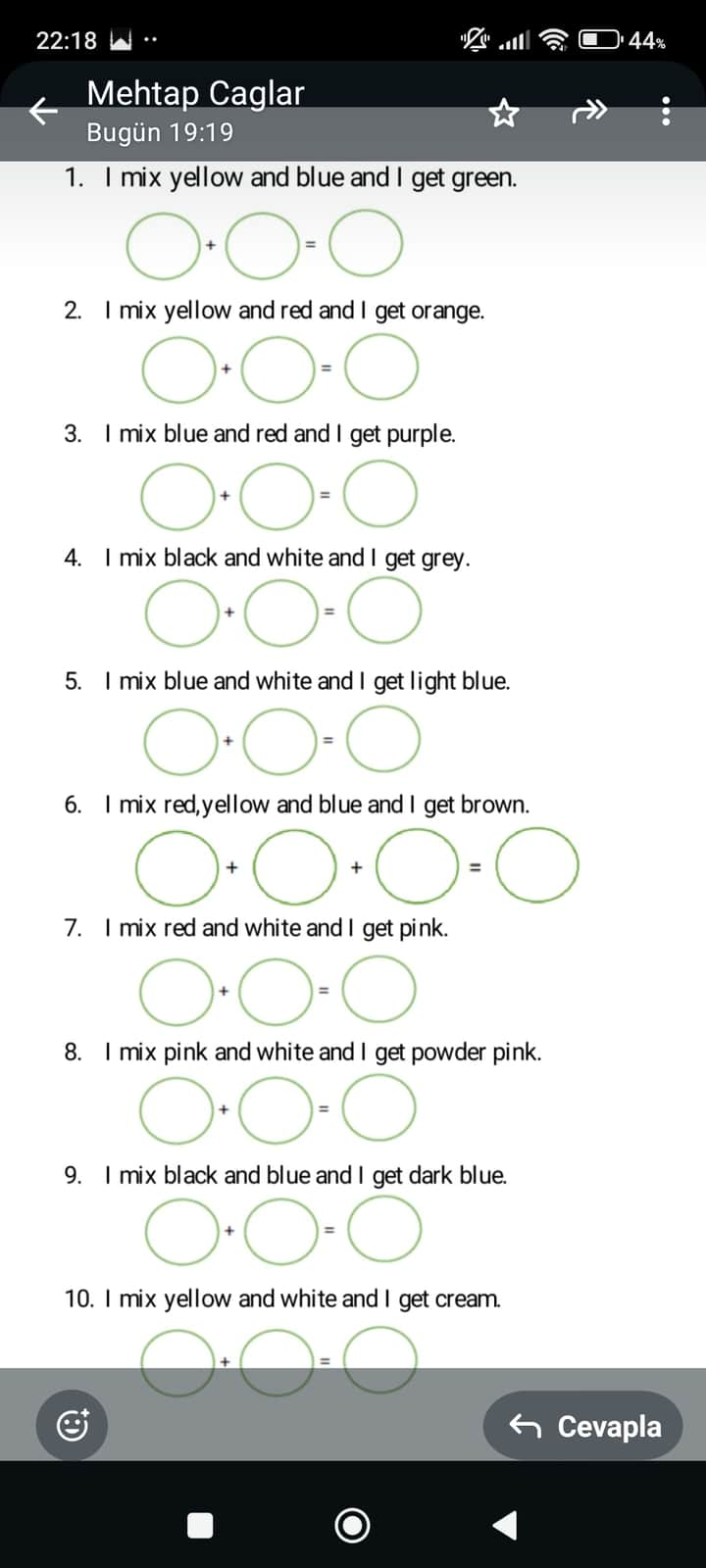
Color Mixing Exercises with Answers
Önemli Noktalar
- Primary colors: yellow, blue, red
- Secondary colors: green, orange, purple (formed by mixing primary colors)
- Adding white or black changes color lightness or darkness
- Mixing all three primary colors produces brown
- Lightening a color is done by mixing with white; darkening by mixing with black
These simple color combinations form the basics of color theory in paint and pigment mixing. Below are solutions to each question with the mixed colors and resulting color.
İçindekiler
- Basic Primary Color Mixes
- Effect of Adding White and Black
- Mixing Three Colors and Shades
- Özet Tablo
- Sık Sorulan Sorular
1. Basic Primary Color Mixes
- Yellow + Blue = Green
- Yellow + Red = Orange
- Blue + Red = Purple
Pro Tip: Mixing two primary colors creates a secondary color: green, orange, or purple.
2. Effect of Adding White and Black
- Black + White = Grey
- Blue + White = Light Blue
- Red + White = Pink
- Pink + White = Powder Pink
- Black + Blue = Dark Blue
- Yellow + White = Cream
Warning: Adding white makes the color lighter (tint), adding black makes it darker (shade). Avoid adding too much black to prevent dull colors.
3. Mixing Three Colors and Shades
- Red + Yellow + Blue = Brown
Özet Tablo
| Question | Color Combination | Resulting Color |
|---|---|---|
| 1 | Yellow + Blue | Green |
| 2 | Yellow + Red | Orange |
| 3 | Blue + Red | Purple |
| 4 | Black + White | Grey |
| 5 | Blue + White | Light Blue |
| 6 | Red + Yellow + Blue | Brown |
| 7 | Red + White | Pink |
| 8 | Pink + White | Powder Pink |
| 9 | Black + Blue | Dark Blue |
| 10 | Yellow + White | Cream |
Sık Sorulan Sorular
1. Why does mixing yellow and blue give green?
Because yellow and blue are primary colors that combine to make green, the secondary color, in pigment mixing (subtractive color mixing).
2. What happens if I add too much black to a color?
It darkens the color but can make it look dull or muddy if used excessively.
3. Can mixing all three primary colors produce other colors besides brown?
In pigment mixing, all three usually produce brown or grey tones; different proportions can vary the hue.
Sonraki Adımlar
Would you like me to explain the difference between additive color mixing (light) and subtractive color mixing (paint)?
Resimdeki renk karıştırma alıştırmasının cevapları nelerdir?
Key Takeaways
- Birincil renkler: red, yellow, blue
- İkincil renkler: green, orange, purple
- Tonlama: beyaz (white) ve siyah (black) ekleyerek light, dark, grey gibi yeni renkler oluşturulur
Renk karıştırma, iki veya üç birincil renk arasındaki kombinasyonlarla yeni renkler elde etme işlemidir. Cevap anahtarı aşağıdadır:
Table of Contents
Cevap Anahtarı
- yellow + blue = green
- yellow + red = orange
- blue + red = purple
- black + white = grey
- blue + white = light blue
- red + yellow + blue = brown
- red + white = pink
- pink + white = powder pink
- black + blue = dark blue
- yellow + white = cream
Karıştırma mantığı:
- Birincil renkler (red, yellow, blue) doğrudan karışıma girer.
- İkincil renkler, birincil iki rengin eşit oranlarla birleşmesinden oluşur (ör. yellow + blue → green).
- Beyaz eklemek rengi açığa, siyah eklemek koyulaştırmaya yarar.
Özet Tablo
| Soru No | Karıştırılan Renkler | Sonuç |
|---|---|---|
| 1 | yellow + blue | green |
| 2 | yellow + red | orange |
| 3 | blue + red | purple |
| 4 | black + white | grey |
| 5 | blue + white | light blue |
| 6 | red + yellow + blue | brown |
| 7 | red + white | pink |
| 8 | pink + white | powder pink |
| 9 | black + blue | dark blue |
| 10 | yellow + white | cream |
SSS
Soru 1: Birincil renkler nelerdir?
Cevap: Red, yellow ve blue, diğer renkleri karıştırarak elde edemediğimiz temel renklerdir.
Soru 2: İkincil renkler nasıl oluşur?
Cevap: İkincil renkler, iki birincil rengin eşit oranlarda karıştırılmasıyla elde edilir (ör. yellow + red = orange).
Soru 3: Tonlama nedir?
Cevap: Renge beyaz (light) veya siyah (dark) ekleyerek açma/karartma işlemidir (ör. blue + white = light blue).
Soru 4: Üç renk karıştırınca neden kahverengi (brown) elde edilir?
Cevap: Red + yellow + blue üç birincil rengin birleşimi nötr bir ton olan brown’u oluşturur.
Çalışmayı anladınız mı? Ekstra pratik sorular ister misiniz?
@Ilhan_Ates