Can you do this assignment correctly for me?
Animal Testing Should Be Banned?
Önemli Noktalar
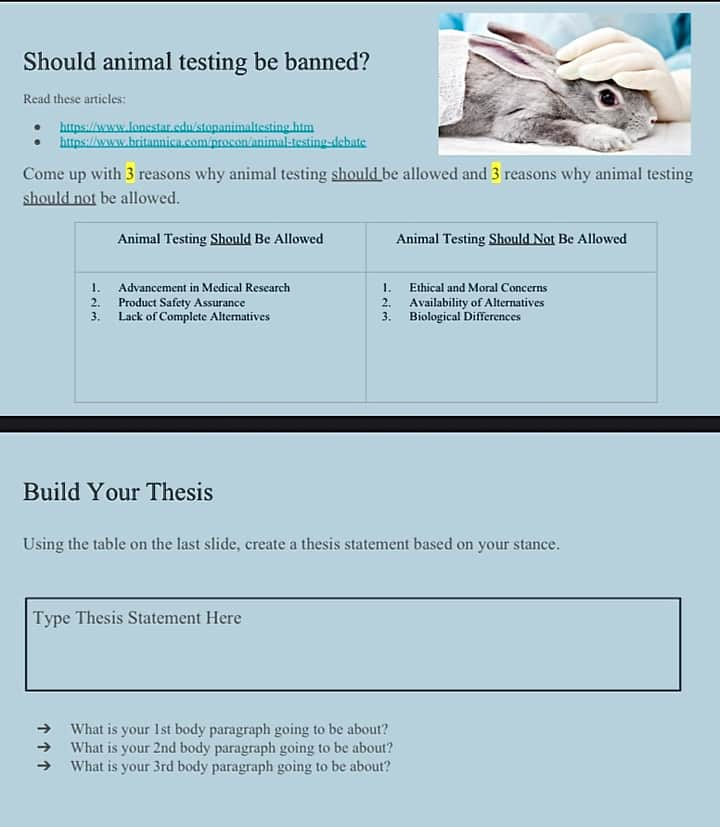
- Animal testing raises significant ethical and moral concerns due to animal suffering.
- There are increasing alternatives available that reduce the need for animal use.
- Biological differences between animals and humans can cause inaccurate or misleading results.
Animal testing should be banned because it causes unnecessary animal suffering, alternatives are now available to replace animal use, and biological differences limit the reliability of animal testing results.
İçindekiler
- Reasons Animal Testing Should Be Allowed
- Reasons Animal Testing Should Not Be Allowed
- Thesis Statement and Body Paragraphs
Reasons Animal Testing Should Be Allowed
- Advancement in Medical Research: Animal testing has historically contributed to important medical breakthroughs such as vaccines and treatments for diseases.
- Product Safety Assurance: It helps ensure that products like medicines and cosmetics are safe for human use before clinical trials.
- Lack of Complete Alternatives: In some complex biological processes, currently there are no fully reliable alternatives to animal testing for studying systemic effects.
Pro Tip: Despite its benefits, ethical considerations must balance the use of animals in research.
Reasons Animal Testing Should Not Be Allowed
- Ethical and Moral Concerns: The pain, suffering, and death caused to animals raises serious ethical questions about their use.
- Availability of Alternatives: Modern technologies like in vitro testing, computer models, and organ-on-chip systems provide humane alternatives.
- Biological Differences: Differences in physiology between animals and humans mean results from animal testing may not accurately predict human outcomes.
Warning: Ignoring animal welfare can lead to loss of public trust and ethical violations.
Thesis Statement and Body Paragraphs
Thesis Statement:
Animal testing should be banned because it causes ethical harm to animals, viable alternatives exist that are more humane, and biological differences make animal data unreliable for human application.
1st Body Paragraph:
Discuss the ethical and moral concerns around causing pain and suffering to animals used in testing.
2nd Body Paragraph:
Explain the availability and advancements in alternative testing methods that reduce or eliminate the need for animal experiments.
3rd Body Paragraph:
Analyze the biological and physiological differences between animals and humans that limit the effectiveness of animal testing in predicting human results.
Would you like me to help you draft the full essay based on this outline?
Should animal testing be banned?
Key Takeaways
- Animal testing involves using non-human animals in experiments to develop drugs, cosmetics, and safety assessments.
- Strong ethical concerns, the rise of alternative methods, and biological differences challenge its continued use.
- A clear thesis statement and structured body paragraphs will make a persuasive argumentative essay.
Animal testing should be banned because it raises serious ethical issues, reliable alternatives are available, and biological differences limit its translational value.
Table of Contents
- Three Reasons Animal Testing Should Be Allowed
- Three Reasons Animal Testing Should Not Be Allowed
- Thesis Statement
- Body Paragraph Plans
- Comparative Table
- Summary Table
- FAQ
Three Reasons Animal Testing Should Be Allowed
- Advancement in Medical Research: Many vaccines and treatments (e.g., insulin, certain cancer drugs) were first developed using animal models.
- Product Safety Assurance: Regulatory bodies often require animal tests to ensure consumer safety before human trials.
- Lack of Complete Alternatives: In some complex systemic studies (e.g., immune response), in vitro methods and computer models cannot yet fully replicate living organisms.
Three Reasons Animal Testing Should Not Be Allowed
- Ethical and Moral Concerns: Subjecting sentient creatures to pain and confinement violates principles of animal welfare.
- Availability of Alternatives: Cutting-edge organs-on-chips, 3D bioprinting, and in silico simulations are increasingly reliable.
- Biological Differences: Results from rodents or rabbits often fail to predict human responses, leading to misleading data.
Thesis Statement
Animal testing should be banned because it raises serious ethical issues, undermines scientific validity due to biological differences, and viable alternative methods exist that protect both human health and animal welfare.
Body Paragraph Plans
- First paragraph: Explore ethical and moral concerns, highlighting animal suffering and current welfare standards.
- Second paragraph: Present alternative technologies (e.g., organs-on-chips, computer models) and their successes.
- Third paragraph: Analyze biological differences between species and the impact on research reliability.
Comparative Table
| Aspect | Animal Testing Allowed | Animal Testing Banned |
|---|---|---|
| Main Benefit | Proven track record in drug/vaccine development | Prevents ethical violations and animal suffering |
| Main Drawback | Ethical costs; species differences may skew results | Potential gaps if alternatives aren’t fully adopted |
| Key Supporting Entity | Regulatory acceptance (FDA, EMA) | Technological advances (organs-on-chips, in silico models) |
Summary Table
| Reason Category | Argument | Relevance to Thesis |
|---|---|---|
| Ethical Concerns | Pain, confinement, moral duty | Underscores need for ban |
| Alternative Methods | 3D bioprinting, cell cultures, computer simulations | Shows feasibility of replacement |
| Biological Validity | Species differences lead to misleading safety/efficacy data | Reinforces that animal data often fails to predict human outcomes |
FAQ
Q1: Is animal testing still required by law?
A1: Many countries are phasing it out for cosmetics, but medical research regulations vary by region.
Q2: How reliable are alternatives like organs-on-chips?
A2: Recent studies show up to 90 % correlation with human physiology in certain tests (Source: Johns Hopkins).
Q3: What ethical frameworks govern animal research?
A3: The 3Rs principle—Replacement, Reduction, Refinement—guides most institutional review boards.
Q4: Can cosmetics companies operate without animal tests?
A4: Yes—over 40 countries now ban animal testing for cosmetics.
Would you like help gathering evidence or case studies for each paragraph?
@Lumarah_AI_Dassari