Languzye AIL
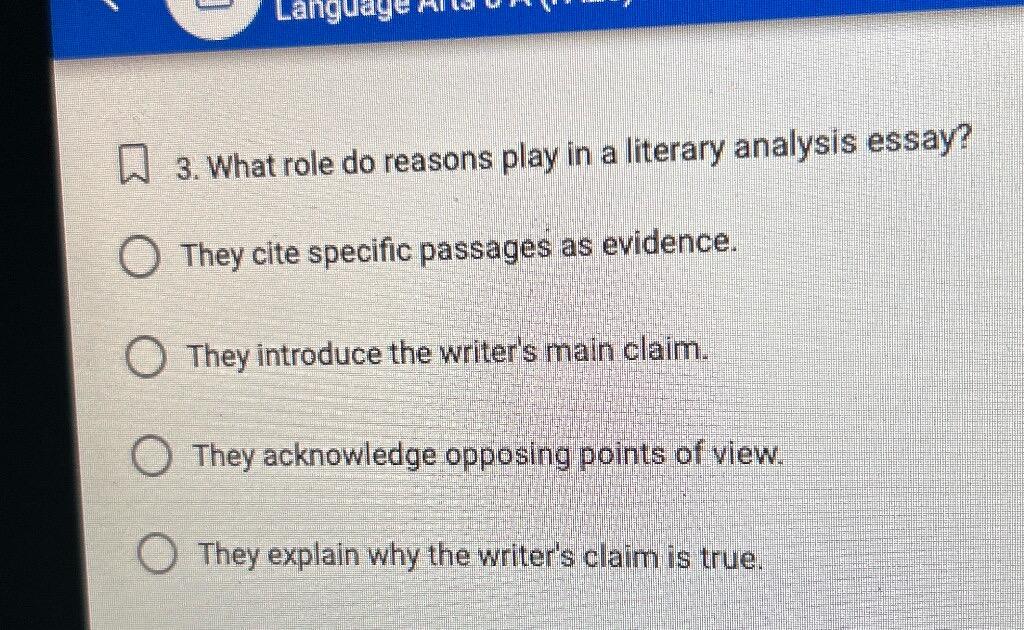
W 3.What role do reasons play in a literary analysis essay?
O They cite specific passages as evidence.
O They introduce the writer’s main claim.
OThey acknowledge opposing poimts ofview.
O They explain why the writers claim is trüe
The Role of Reasons in a Literary Analysis Essay
 SOLUTION STEPS:
Step 1 — Analyze Option 1 (“They cite specific passages as evidence.”)
This statement describes textual evidence (direct quotes, paraphrasing, or summaries), not reasons. While evidence supports the reasons, citing specific text passages is not the primary function of reasons themselves. Therefore, this option is incorrect.
Step 2 — Analyze Option 2 (“They introduce the writer’s main claim.”)
The writer’s main claim is introduced in the thesis statement within the introductory paragraph. Reasons support and expand upon the claim rather than introducing it. Therefore, this option is incorrect.
Step 3 — Analyze Option 3 (“They acknowledge opposing points of view.”)
Acknowledging differing perspectives is the role of a counterclaim or concession, which addresses potential counterarguments. It is not the core definition or purpose of providing reasons. Therefore, this option is incorrect.
Step 4 — Analyze Option 4 (“They explain why the writer’s claim is true.”)
In an argumentative or literary analysis essay, reasons provide the logical rationale and main points that justify and explain why the thesis (the central claim) is valid. They serve as the structural backbone that connects the central claim to the specific evidence. Therefore, this option is correct.
Step 5 — Option Comparison
 Option 1: “They cite specific passages as evidence.” — Incorrect; this defines textual evidence or citations.
Option 2: “They introduce the writer’s main claim.” — Incorrect; this is the role of the thesis statement.
Option 3: “They acknowledge opposing points of view.” — Incorrect; this defines a counterclaim.
 Option 4: “They explain why the writer’s claim is true.” — Correct; reasons provide the logical justification for the thesis.
Step 6 — Final Verification
An essay follows a standard structural hierarchy: Claim (what you argue) \rightarrow Reasons (why the argument is valid) \rightarrow Evidence (proof from the text supporting each reason). Thus, reasons directly explain why the claim is true.
━━━━━━━━━━━━━━━━━━━━━━━━━━━
ANSWER: They explain why the writer’s claim is true. (Option 4)
━━━━━━━━━━━━━━━━━━━━━━━━━━━
Would you like to review how to properly integrate textual evidence to support your reasons in a body paragraph?
Write only the answer to my question. Do not write a long explanation; write only the answers, the correct answers.
The Role of Reasons in a Literary Analysis Essay
SOLUTION STEPS:
Step 1 — Analyze Option 1 (“They cite specific passages as evidence.”)
Citing specific passages describes textual evidence (direct quotes or citations), not reasons. Therefore, this option is incorrect.
Step 2 — Analyze Option 2 (“They introduce the writer’s main claim.”)
Introducing the central argument is the function of the thesis statement, not the supporting reasons. Therefore, this option is incorrect.
Step 3 — Analyze Option 3 (“They acknowledge opposing points of view.”)
Addressing opposing perspectives is the role of a counterclaim or concession. Therefore, this option is incorrect.
Step 4 — Analyze Option 4 (“They explain why the writer’s claim is true.”)
In an essay, reasons provide the logical justifications that explain why the main claim (thesis) is valid. Therefore, this option is correct.
Step 5 — Option Comparison
1. They cite specific passages as evidence. — Defines textual evidence.
2. They introduce the writer’s main claim. — Defines the thesis statement.
3. They acknowledge opposing points of view. — Defines a counterclaim.
4. They explain why the writer’s claim is true. — Correctly defines the function of reasons.
Step 6 — Final Verification
A claim asserts a point of view, while reasons directly justify and explain why that claim holds true before evidence is introduced to support it.
━━━━━━━━━━━━━━━━━━━━━━━━━━━
ANSWER: They explain why the writer’s claim is true. (Fourth Option)
━━━━━━━━━━━━━━━━━━━━━━━━━━━
Would you like to practice identifying the difference between a claim, a reason, and evidence with an example passage?