Ktoyyxotx Konulu İngilizce Dilbilgisi Alıştırması Yardımı
Önemli Noktalar
- Alıştırmada modal fiiller (have to / don’t have to, should / shouldn’t) kullanılıyor
- Sıklık zarfları (always, sometimes, usually, never) doğru şekilde seçilmeli
- Basit şimdiki zaman (Simple Present) fiil çekimleri isteniyor
- Doğru soru kalıbını oluşturmak için question tag eklemesi yapılacak
Bu alıştırmanın tüm bölümlerini adım adım çözelim.
İçindekiler
- A Bölümü: Have to / Don’t have to
- B Bölümü: Should / Shouldn’t
- C Bölümü: Frequency Adverbs
- D Bölümü: Simple Present Tense
- E Bölümü: Yes/No Soruları Yanıtlamak
- F Bölümü: Question Tags
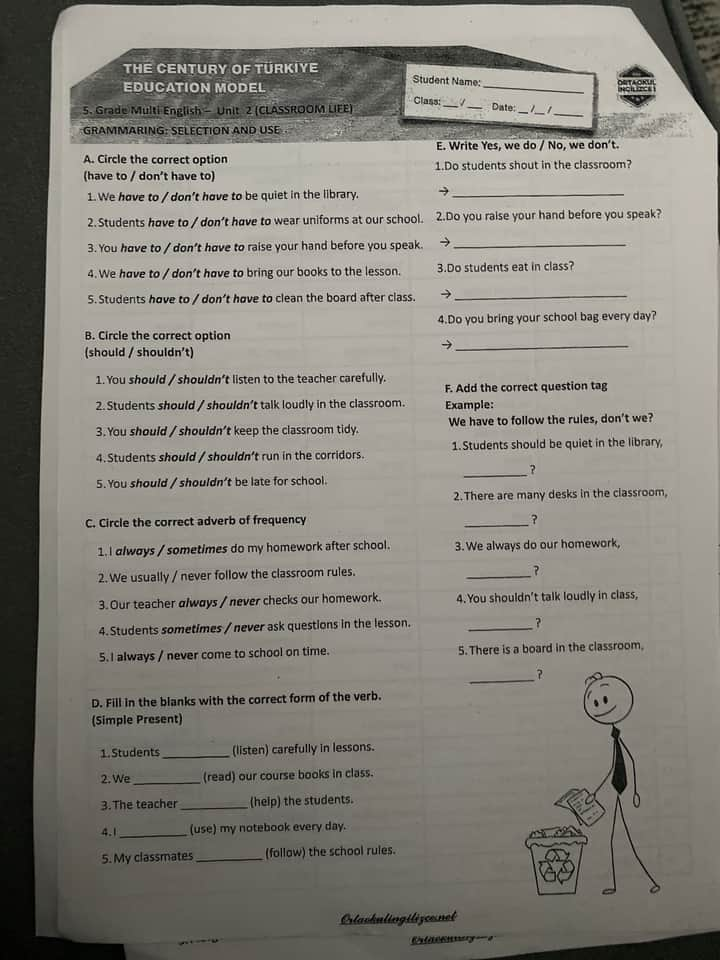
A Bölümü: Have to / Don’t have to
- We have to be quiet in the library.
- Students have to wear uniforms at our school.
- You have to raise your hand before you speak.
- We have to bring our books to the lesson.
- Students have to clean the board after class.
Açıklama: “Have to” zorunluluk ifade eder. Örnek cümlelerde belirtilen kurallar için hep zorunluluk vardır, bu nedenle “have to” seçilir.
B Bölümü: Should / Shouldn’t
- You should listen to the teacher carefully.
- Students shouldn’t talk loudly in the classroom.
- You should keep the classroom tidy.
- Students shouldn’t run in the corridors.
- You shouldn’t be late for school.
Not: “Should” tavsiye veya olumlu davranış belirtiyor. “Shouldn’t” ise yapılmaması gereken, olumsuz tavsiyedir.
C Bölümü: Adverbs of Frequency
- I always do my homework after school.
- We usually / never follow the classroom rules. (Kendi durumunuza göre seçiniz, muhtemelen “usually”)
- Our teacher always checks our homework.
- Students sometimes ask questions in the lesson.
- I always come to school on time.
Açıklama:
- Always (her zaman) en sık kullanılan
- Sometimes (bazı zamanlar)
- Usually (genellikle)
- Never (asla)
D Bölümü: Basit Şimdiki Zaman Fiil Çekimleri
- Students listen (listen) carefully in lessons.
- We read (read) our course books in class.
- The teacher helps (help) the students.
- I use (use) my notebook every day.
- My classmates follow (follow) the school rules.
Not:
- Özne “he/she/it” ise fiile -s takısı gelir (helps)
- Diğer kişiler yalın halde (listen, read)
E Bölümü: Doğru Cevabı Yazmak (Yes / No / We don’t)
-
Do students shout in the classroom?
→ No, they don’t. -
Do you raise your hand before you speak?
→ Yes, I do. -
Do students eat in class?
→ No, they don’t. -
Do you bring your school bag every day?
→ Yes, I do.
F Bölümü: Correct Question Tag Eklemek
- Students should be quiet in the library, shouldn’t they?
- There are many desks in the classroom, aren’t there?
- We always do our homework, don’t we?
- You shouldn’t talk loudly in class, should you?
- There is a board in the classroom, isn’t there?
Açıklama:
- Pozitif cümleden sonra negatif question tag gelir.
- Negatif cümleden sonra pozitif question tag gelir.
Sonraki Adımlar
Bu alıştırma için dilbilgisi noktalarını anladınız mı? İsterseniz, benzer örneklerle pratik yapmaya devam edebiliriz veya bu modal ve zaman konularında ayrıntılı kurallar ve istisnalar hakkında bilgi vermemi ister misiniz?
Çalışma Sayfası Soruları ve Cevapları
Önemli Noktalar
- have to zorunluluk, don’t have to zorunluluk yokluğunu ifade eder.
- should öneri, shouldn’t ise olumsuz öneri yapar.
- Sıklık zarfları (always, usually, sometimes, never) cümlede kullanılan eylemin ne kadar sık tekrarlandığını gösterir.
Aşağıda her bölüme ait doğru cevaplar listelenmiştir.
İçindekiler
- A Bölümü: have to / don’t have to
- B Bölümü: should / shouldn’t
- C Bölümü: Adverbs of Frequency
- D Bölümü: Simple Present Fiil Çekimi
- E Bölümü: Yes, we do / No, we don’t
- F Bölümü: Question Tags
- Have to vs Should Karşılaştırma Tablosu
- Özet Tablosu
- SSS
1. A Bölümü: have to / don’t have to
- We have to be quiet in the library.
- Students have to wear uniforms at our school.
- You have to raise your hand before you speak.
- We have to bring our books to the lesson.
- Students don’t have to clean the board after class.
2. B Bölümü: should / shouldn’t
- You should listen to the teacher carefully.
- Students shouldn’t talk loudly in the classroom.
- You should keep the classroom tidy.
- Students shouldn’t run in the corridors.
- You shouldn’t be late for school.
3. C Bölümü: Adverbs of Frequency
- I always do my homework after school.
- We usually follow the classroom rules.
- Our teacher always checks our homework.
- Students sometimes ask questions in the lesson.
- I always come to school on time.
4. D Bölümü: Simple Present Fiil Çekimi
- Students listen carefully in lessons.
- We read our course books in class.
- The teacher helps the students.
- I use my notebook every day.
- My classmates follow the school rules.
5. E Bölümü: Yes, we do / No, we don’t
- Do students shout in the classroom? – No, they don’t.
- Do you raise your hand before you speak? – Yes, I do.
- Do students eat in class? – No, they don’t.
- Do you bring your school bag every day? – Yes, I do.
6. F Bölümü: Question Tags
- Students should be quiet in the library, shouldn’t they?
- There are many desks in the classroom, aren’t there?
- We always do our homework, don’t we?
- You shouldn’t talk loudly in class, should you?
- There is a board in the classroom, isn’t there?
7. Have to vs Should Karşılaştırma Tablosu
| Dilbilgisi | Kullanım Alanı | Türkçe Anlamı |
|---|---|---|
| have to | Dışsal zorunluluk | “-meli/malı” zorunluluk (must yerine) |
| should | Kişisel tavsiye/öneri | “-meli/malı” öneri (zorunluluk değil) |
8. Özet Tablosu
| Bölüm | Konu | Anahtar Nokta |
|---|---|---|
| A | have to / don’t have to | Zorunluluk vs zorunluluk yokluğu |
| B | should / shouldn’t | Öneri/uyarı |
| C | Adverbs of Frequency | Eylemin tekrar sıklığı |
| D | Simple Present | Fiil çekimi: listen, read, help, use |
| E | Yes/No Questions | Kısa cevap (“Yes, …” / “No, …”) |
| F | Question Tags | Doğrudan cümleyi teyit eden kısa ek soru |
9. SSS
- have to ile must arasındaki fark nedir?
- should ile have to kullanımını nasıl ayırt ederiz?
- Question tag oluşturmanın kuralı nedir?
- Sıklık zarflarının cümledeki yeri neresidir?
Bu konularla ilgili örnek alıştırmalar veya daha fazla açıklama ister misiniz?
@Selin_Arslanoglu