How to Solve the Exercise on Finding Words and Grouping Places and People
Key Points
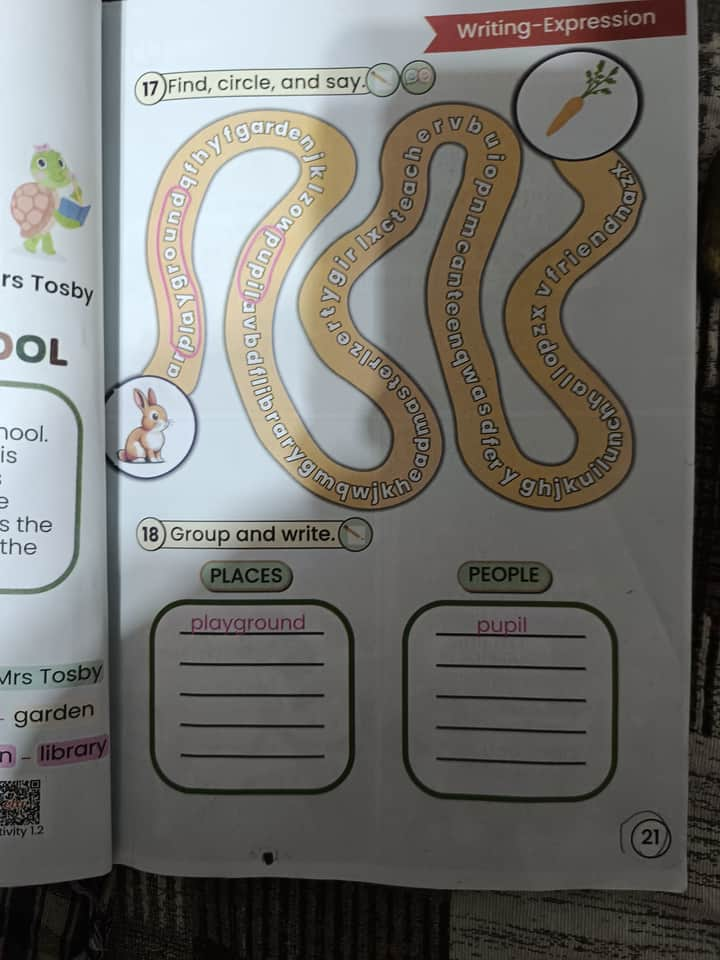
- The task involves finding hidden words related to the pictures (rabbit and carrot) in winding letter paths.
- Words related to “PLACES” and “PEOPLE” should be grouped and written under the respective headings.
- Example words found are “playground” for places and “pupil” for people.
The exercise asks you to follow two main tasks: First, find and circle the hidden words corresponding to the pictures; second, group and write words into two categories: PLACES and PEOPLE. From the image and similar examples, common places include playground, garden, library, canteen, and common people include pupil, friend, teacher, kid.
Contents
- Find, Circle, and Say (Task 17)
- Group and Write: Places vs People (Task 18)
- Comparison Table: Places vs People
- Summary Table
- Frequently Asked Questions
1. Find, Circle, and Say (Task 17)
In this task, follow each winding path to find hidden English words that correspond to the images shown:
- Rabbit path: Follow the letters spelling the word rabbit and circle it.
- Carrot path: Follow the letters spelling carrot and circle it.
This visual word search helps practice reading and word recognition.
Pro Tip: Sound out the letters as you circle them to strengthen your pronunciation skills.
2. Group and Write: Places vs People (Task 18)
After identifying words from the word search, organize them into two groups:
PLACES
- playground
- garden
- library
- canteen
- kitchen
- schoolroom
PEOPLE
- pupil
- friend
- teacher
- kid
- classmate
- student
Fill in the blanks under each category with related words you know. This activity helps build vocabulary and categorization skills.
Warning: Avoid mixing places and people; remember places are locations, people are persons.
3. Comparison Table: Places vs People
| Aspect | Places | People |
|---|---|---|
| Definition | Locations where activities happen | Individuals involved in activities |
| Examples (Words) | Playground, garden, library, canteen | Pupil, teacher, friend, kid |
| Category Type | Noun (location) | Noun (person) |
| Function in Context | Where students go or stay | Who students are or interact with |
4. Summary Table
| Element | Details |
|---|---|
| Task 17 | Find and circle words like “rabbit,” “carrot” |
| Task 18 | Group words under PLACES and PEOPLE |
| Key Places | Playground, library, garden, canteen |
| Key People | Pupil, teacher, friend, kid |
5. Frequently Asked Questions
-
What are examples of Places and People in the exercise?
Places include playground, library, garden; people include pupil, teacher, friend. -
How do I know which words belong to Places or People?
Places are location names; people are individuals like students or teachers. -
Can I add more words not seen in the exercise?
Yes, adding related known vocabulary helps expand your learning.
Next Steps
Would you like me to provide example sentences using the words for each category to help practice?
Or shall I prepare a mini quiz to test your understanding of Places vs People vocabulary?
Resimli Soru 11-01-2026 21:43:57
Önemli Noktalar
-
- soruda yol üzerindeki alfabetik harf dizisini takip ederek kelimeleri bulun.
- Carrot ve Rabbit kelimelerinin harflerini sırasıyla C → A → R → R → O → T ve R → A → B → B → I → T şeklinde izleyin.
-
- soruda Places ve People kategorilerine göre kelimeleri gruplayın.
Cevaplar
17. Sorunun Cevabı
- Carrot: C → A → R → R → O → T
- Rabbit: R → A → B → B → I → T
Bu harf dizilerini yol üzerinde daire içine alarak “carrot” ve “rabbit” kelimelerini bulup söyleyebilirsiniz.
18. Sorunun Cevabı
Places
- playground
- garden
- library
- canteen
- classroom
People
- pupil
- teacher
- friend
Karşılaştırma Tablosu
| Places | People |
|---|---|
| playground | pupil |
| garden | teacher |
| library | friend |
| canteen | — |
| classroom | — |
Özet Tablo
| Soru | Bulunan Kelimeler |
|---|---|
| 17 | carrot, rabbit |
| 18 | playground, garden, library, canteen, classroom pupil, teacher, friend |
SSS
Q1: Kelimeleri bulurken neden alfabetik sıra önemli?
A1: Yol üzerindeki harfler A’dan Z’ye dizili, bu yüzden kelimenin harflerini alfabe sırasına göre takip etmek gerekiyor.
Q2: Daire içine alırken büyük/küçük harfe dikkat etmeli miyim?
A2: Hayır. Harfin şekli yeterli; önemli olan doğru sırayı yakalamak.
Q3: 18. soruda başka hangi kelimeler eklenebilir?
A3: Örneğin office, classmate, student, museum gibi yer ve kişi adları.
Bu alıştırmada harf yolu yöntemini nasıl buldunuz? Başka bir örnekle pratiğe devam etmek ister misiniz? @Filiz_Yuksek