Bir ekildae özetle
Soru:
Bir şekilde özetle!
Table of Contents
- Giriş
- Otçul (Herbivor) Sindirim Adaptasyonları
- Etçil (Karnivor) Sindirim Adaptasyonları
- Karşılaştırmalı Özet Tablosu
- Özet ve Sonuç
1. Giriş
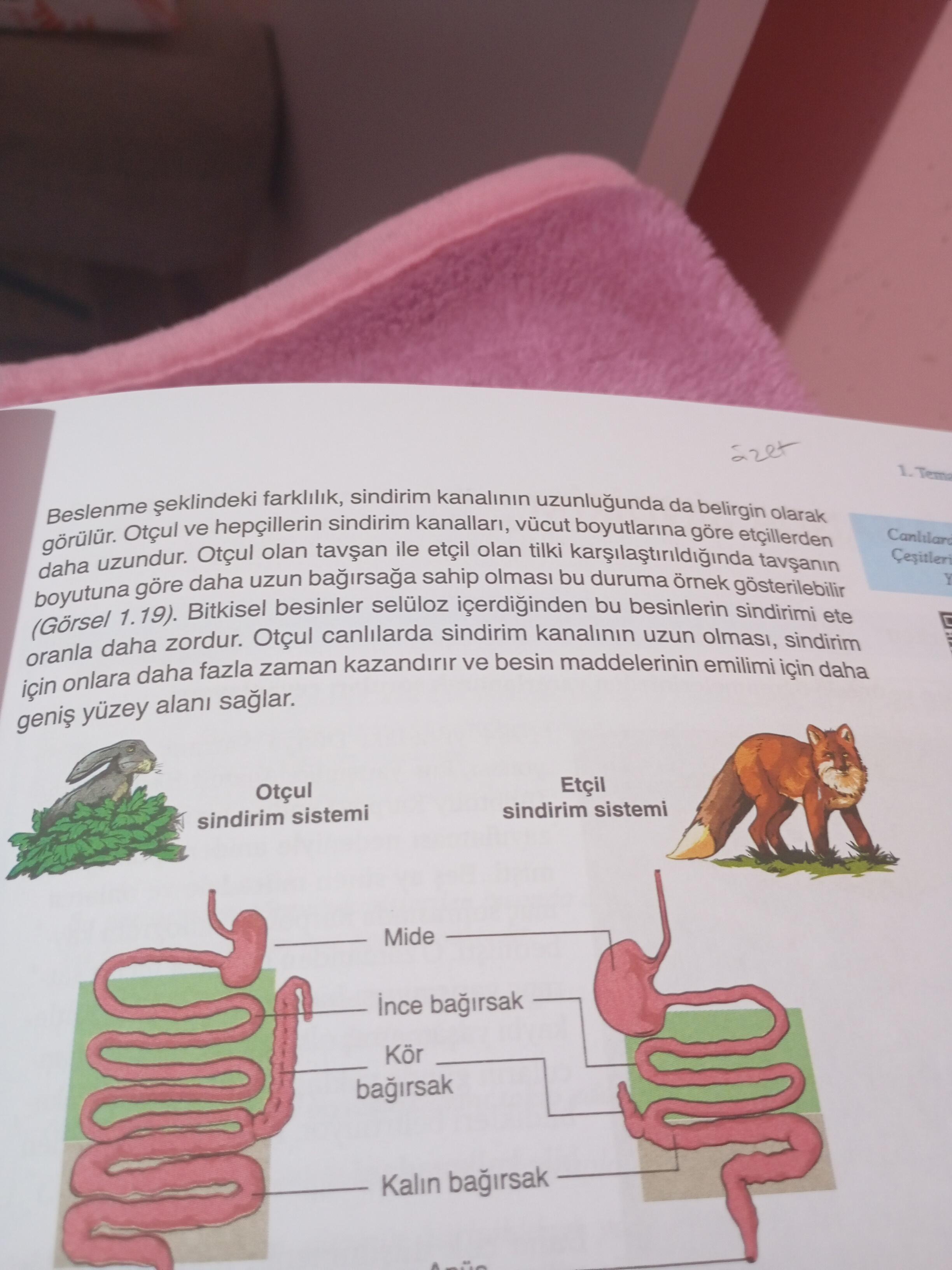
Bitkisel ve hayvansal besin kaynakları, içerik olarak farklı yapıda olduğu için canlıların sindirim sistemleri de bu besin tiplerine göre özelleşmiştir. Otçul hayvanlar, selüloz açısından zengin olan bitkisel dokuyu sindirebilmek için uzun ve bölgeleri farklılaşmış bir sindirim kanalına; etçil hayvanlar ise yüksek protein ve yağ içeren et beslenmesini destekleyen, kısa ve basit yapılı bir sindirim kanalına sahiptir.
2. Otçul (Herbivor) Sindirim Adaptasyonları
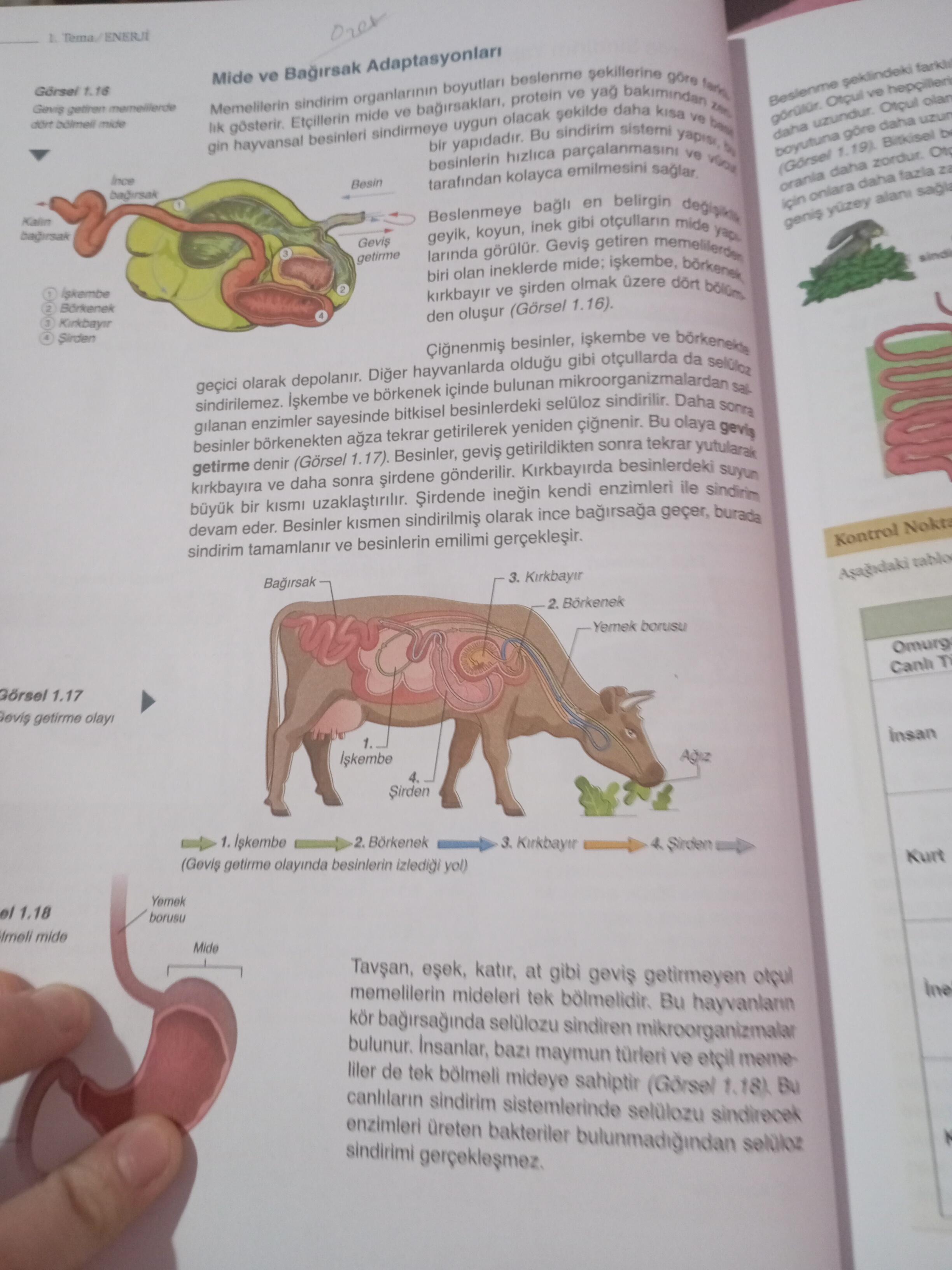
Otçul hayvanlar (inek, koyun, geyik gibi) genellikle selülozu parçalayacak mikrobiyal fermantasyona ihtiyaç duyar. Bu nedenle:
- Çok bölmeli mide: Ruminantlarda dört bölmeli (işkembe, kırkbayır, kırkhan, gerçek mide) yapı; selülozu parçalamak için mikrobiyal popülasyon barındırır.
- Geniş işkembe (rumen): Mikrobiyal fermantasyonun gerçekleştiği ana bölge.
- Gelişkin kör bağırsak (çekum) ve kalın bağırsak: Selülozun fermantasyonu ve su emilimi için geniş yüzey sağlar.
- Uzun ince bağırsak: Besin öğelerinin (amino asit, glukoz, yağ asitleri) emilimi için yeterli zaman ve yüzey sunar.
- Mide pH’sı: Nispeten nötr/az asidik ortam, mikroorganizma aktivitesine uygun koşul oluşturur.
Başlıca işlev ve yapı farklılıkları:
- Mikrobiyal fermantasyon sonucu kısa zincirli yağ asitleri oluşturulur.
- Selüloz sindirimi, %50–70’e kadar enerji verimi sağlar.
- Uzatılmış transit süresi (24–72 saat) besinlerin tam sindirimi için avantajlıdır.
3. Etçil (Karnivor) Sindirim Adaptasyonları
Etçil hayvanlar (kurt, kedi, köpek, kedi familyası vb.) et ve proteinden zengin beslenir; selüloz nadiren diyetin parçasıdır. Bu yüzden:
- Tek bölmeli mide: Kuvvetli asidik pH (pH ~1–2), bakteri ve parazit yükünü azaltır; proteinleri hızla çözer.
- Kısa ince bağırsak: Protein ve yağ sindirimi çabuk gerçekleşir, emilim için yeterli yüzey sağlanır.
- Küçük veya yok denecek kadar küçük çekum ve kalın bağırsak: Selüloz fermantasyonuna ihtiyaç olmadığından çekum gelişimi sınırlıdır.
- Yüksek enzim aktivitesi: Pepsin, proteaz ve lipaz gibi enzimler yoğun olarak üretilir.
Etçil sindirim sistemi özellikleri:
- Hızlı geçiş süresi (12–24 saat), hızlı enerji elde edilmesini sağlar.
- Konsantre besin (protein ve yağ) çabuk sindirilir, depolanır veya metabolize edilir.
- Asidik mide sıvısı, patojenleri ve parazitleri büyük oranda elimine eder.
4. Karşılaştırmalı Özet Tablosu
| Özellik | Otçul (Herbivor) | Etçil (Karnivor) |
|---|---|---|
| Mide Yapısı | Çok bölmeli (4 odacıklı) | Tek bölmeli |
| Mide pH’sı | Nötr – hafif asidik | Çok asidik (pH ~1–2) |
| İnce Bağırsak Uzunluğu | Uzun (vücut boyu 10–15×) | Kısa (vücut boyu 3–6×) |
| Çekum ve Kalın Bağırsak Gelişimi | Çok gelişmiş, fermantasyon bölgesi | Küçük veya mevcut değil |
| Sonuçlanan Sindirim Süresi | Uzun (24–72 saat) | Kısa (12–24 saat) |
| Ana Sindirim Mekanizması | Mikrobiyal fermantasyon → kısa zincirli yağ asitleri | Asit+enzim ile protein ve yağ hidrolizi |
| Enerji kaynağı | Selüloz → kısa zincirli yağ asitleri | Protein ve yağ asitleri |
5. Özet ve Sonuç
- Otçullar, selülozu sindirmek için mikrobiyal fermantasyona ve uzun sindirim kanalına ihtiyaç duyar.
- Etçiller, yüksek asidik ortam ve güçlü enzimlerle protein-yağ sindirimini hızla gerçekleştirir.
- Her iki grup, besin kaynağının kimyasal yapısına uyum sağlayan anatomik ve fizyolojik adaptasyonlar geliştirmiştir.
Bu adaptasyonlar, hayvanların enerji verimliliği, hastalık direnci ve ekolojik nişlerinde başarılı olmalarını sağlar. @Busra_deniz_Yildiz
Ruminant and Non-Ruminant (Etçıl) Digestive Systems: Summary and Comparison
Answer:
Your shared images and notes highlight the anatomy and function of digestive systems in ruminants (like cows) and non-ruminant (etçıl / carnivorous or omnivorous) animals. Let’s summarize and compare these systems clearly and comprehensively.
Table of Contents
- Overview of Ruminant Digestive System
- Overview of Non-Ruminant Digestive System
- Key Differences Between Ruminant and Non-Ruminant Digestion
- Function of Different Stomach Compartments in Ruminants
- Summary Table
1. Overview of Ruminant Digestive System
Ruminants include animals such as cows, sheep, goats, deer, and others that specialize in digesting plant fibers like cellulose. Their digestive system is highly specialized to break down tough plant fibers that non-ruminants cannot digest efficiently.
Key Components:
-
Four-chambered stomach:
Ruminants have a stomach with four compartments:- Rumen (Yemeklik)
- Reticulum (Keklik)
- Omasum (Kitlesinme odası)
- Abomasum (Gerçek mide / gerçek mide) - similar to the simple stomach of non-ruminants
-
Rumen function:
Acts as a fermentation vat populated with microorganisms (bacteria, protozoa) that break down cellulose into volatile fatty acids, which the animal can absorb. -
Chewing cud (Rumination):
Partially digested food (cud) is regurgitated and re-chewed to break down fibers further for microbial digestion. -
Enzymatic digestion:
Happens mainly in the abomasum and intestines after fermentation.
2. Overview of Non-Ruminant (Etçıl) Digestive System
Non-ruminants (like humans, pigs, dogs) either have a simple stomach system or digestive tracks adapted to meat or omnivorous diets.
Key Components:
- Simple stomach: Only one chamber is present.
- Digestion: Mostly enzymatic; stomach acids and enzymes break down proteins, carbohydrates, and fats.
- Shorter digestive tract: Compared to ruminants, since their diet is easier to digest.
- Carnivores: Have shorter intestines and a simpler gut since meat is easier to digest.
- Omnivores: Have an intermediate digestive system adapted to mixed diets.
3. Key Differences Between Ruminant and Non-Ruminant Digestion
| Feature | Ruminants (Cow example) | Non-Ruminants (Carnivores/Omnivores) |
|---|---|---|
| Stomach chambers | Four (Rumen, Reticulum, Omasum, Abomasum) | One (simple stomach) |
| Digestion type | Microbial fermentation + enzymatic digestion | Mainly enzymatic digestion |
| Food type | Cellulose-rich plants (grass, hay) | Meat, plant materials (varies) |
| Chewing behavior | Regurgitate and re-chew food (rumination) | No rumination |
| Digestive tract length | Long, complex | Shorter, simpler |
| Microbial population | Large community in rumen for fiber breakdown | Smaller community or none |
| Efficiency in fiber digestion | Very high due to microbial fermentation | Low, cannot digest cellulose efficiently |
4. Function of Different Stomach Compartments in Ruminants
| Chamber | Function |
|---|---|
| Rumen | Fermentation vat; microbes digest cellulose and produce volatile fatty acids (VFAs) |
| Reticulum | Works with rumen to trap large particles and move cud back for re-chewing |
| Omasum | Absorbs water and nutrients from digesta; reduces particle size before passing to abomasum |
| Abomasum | True stomach where enzymatic digestion occurs, similar to simple stomach of non-ruminants |
5. Summary Table
| Aspect | Ruminant Digestive System | Non-Ruminant Digestive System |
|---|---|---|
| Stomach Structure | Four chambers (complex) | Single chamber (simple stomach) |
| Microbial Fermentation | Extensive, in rumen | Minimal or none |
| Food Type Adaptation | Herbivorous, high cellulose diet | Carnivorous/omnivorous |
| Chewing Process | Rumination (cud chewing) | No rumination |
| Digestive Efficiency | High for fibrous foods | Low for fibrous foods |
| Intestine Length | Long, to maximize nutrient absorption | Shorter |
| Main Digestive Action | Microbial fermentation + enzymatic digestion | Enzymatic digestion |
Summary
In your shared textbook pages and notes, the key points about ruminants reflect their unique microbe-aided digestion that allows them to extract nutrients from tough plant fibers. Non-ruminants have simpler digestive anatomy focusing mainly on enzymatic breakdown of food.
Understanding these differences is vital in biology to explain animal nutrition, agriculture, and animal husbandry.
If you’d like, I can help with a more detailed explanation of any specific part or provide a concise study summary.