Question
Answer:
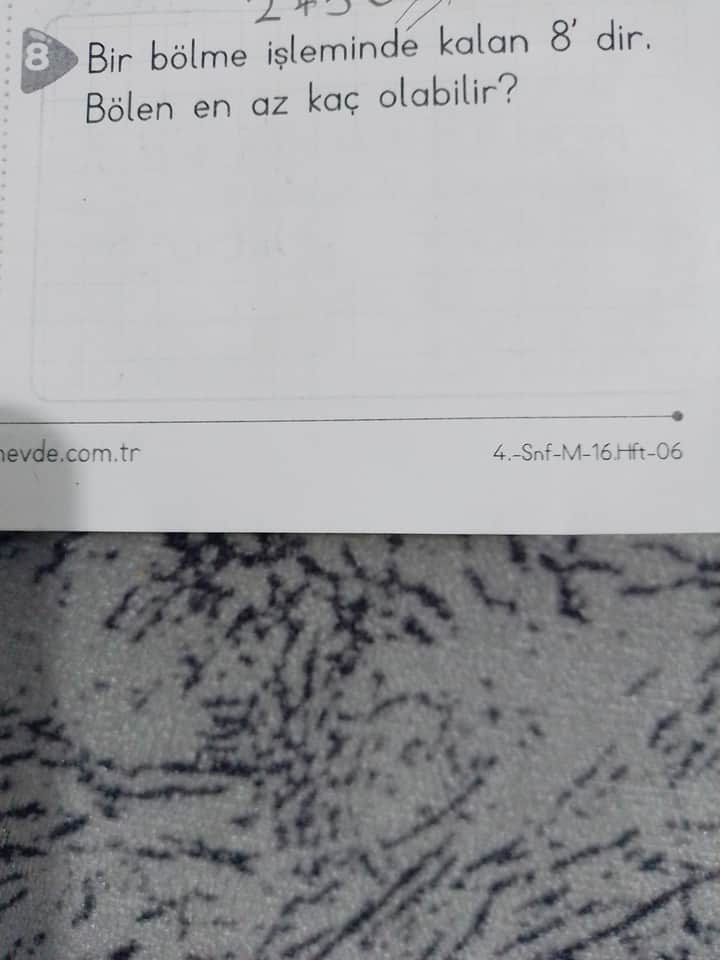
The problem states that in a division operation, the remainder is 8. We are asked to find the smallest possible divisor.
Explanation:
In a division operation, we have the equation:
\text{Dividend} = (\text{Divisor} \times \text{Quotient}) + \text{Remainder}
Given that the remainder is 8, the remainder must be less than the divisor. Therefore, the smallest possible divisor is 9, because:
- Remainder Rule: The remainder must always be smaller than the divisor.
- Therefore, if the remainder is 8, then the smallest divisor must be 9, since any smaller divisor would not satisfy the definition of the division operation, as the remainder 8 must be strictly less than the divisor.
Deductive Steps:
- Define the Problem: Given remainder = 8.
- Apply the Remainder Condition: The divisor must be greater than the remainder.
- Conclusion on Divisor: Divisor must be at least 9.
Final Answer:
The smallest possible divisor for the division operation where the remainder is 8 is 9.