- Group and write.
PEOPLE
E) g. classmate
PLACES
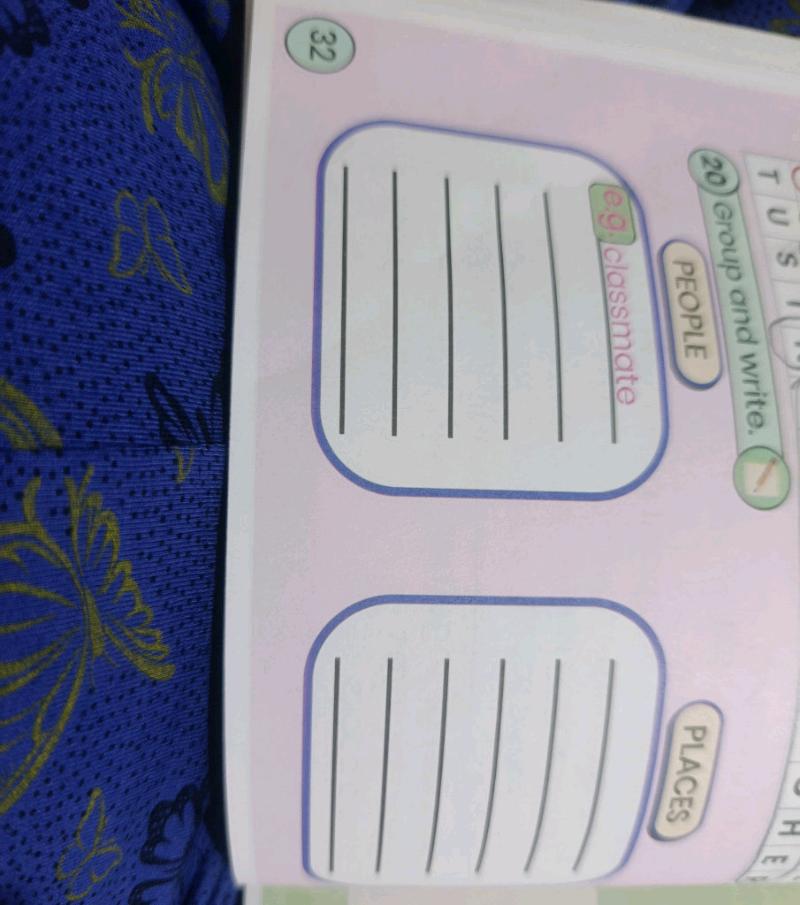
Vocabulary Categorization: People vs. Places
In this exercise, words are classified based on whether they refer to a person (an individual, role, or profession) or a place (a location or building).
 STEP-BY-STEP SOLUTION:
Step 1 — Identify the Given Example
- classmate: A person who is in the same class at school. This is already provided as an example under PEOPLE.
Step 2 — Categorize Words Referring to People
- cousin: A family member (the child of an aunt or uncle) \rightarrow PEOPLE
- doctor: A professional who treats sick people \rightarrow PEOPLE
- teacher: A professional who educates students \rightarrow PEOPLE
- butcher: A person whose job is to cut and sell meat \rightarrow PEOPLE
Step 3 — Categorize Words Referring to Places
- library: A building or room where books are kept to read or borrow \rightarrow PLACES
- bakery: A shop where bread and cakes are baked and sold \rightarrow PLACES
- museum: A building where historical, artistic, or scientific items are displayed \rightarrow PLACES
- post office: A public building where mail is handled and stamps are sold \rightarrow PLACES
━━━━━━━━━━━━━━━━━━━━━━━━━━━
 FINAL ANSWER:
PEOPLE
- E.g. classmate
- cousin
- doctor
- teacher
- butcher
PLACES
- library
- bakery
- museum
- post office
━━━━━━━━━━━━━━━━━━━━━━━━━━━
 KEY CONCEPTS:
- Noun Classification: Organizing nouns by semantic category (such as people, places, things, or animals) helps build vocabulary connections and improves reading comprehension.
 COMMON MISTAKES:
 Incorrect Approach: Placing butcher under PLACES assuming it means the shop.
- Correct Approach: A butcher is the person/worker. The shop itself is typically called a butcher’s or butcher shop.
Would you like to practice making complete sentences with these words using “There is…” or “He/She is…”?